Author: Ziad Alsalama

  • Grand Imam of Al Azhar departs Bahrain

    Grand Imam of Al Azhar departs Bahrain

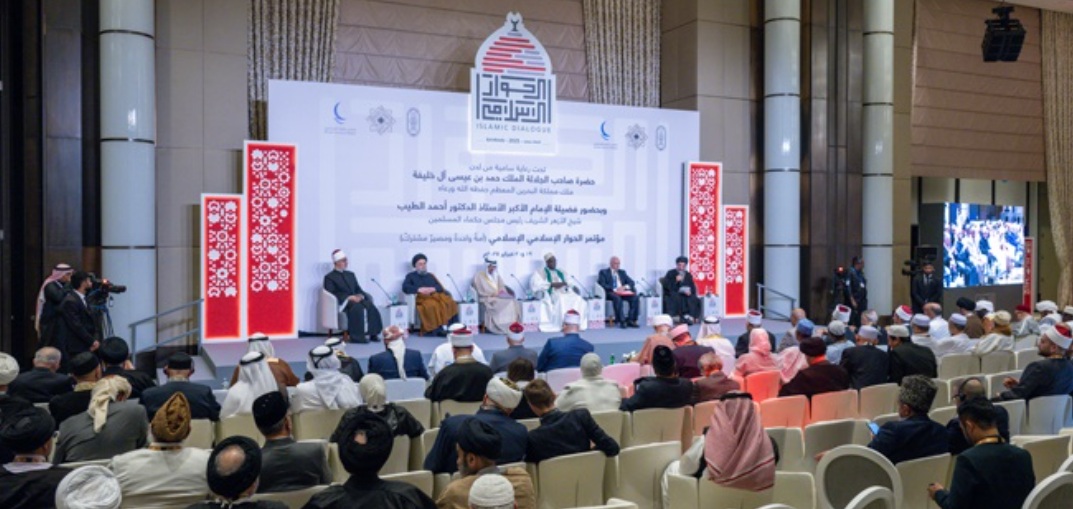
    His Eminence Dr. Ahmed Al Tayyeb, Grand Imam of Al Azhar Al Sharif and Chairman of the Muslim Council of Elders, departed the Kingdom of Bahrain today following his participation in the Intra-Islamic Dialogue Conference, which was held under the esteemed patronage of His Majesty the King.

    The conference was held under the theme “One Nation, One Shared Destiny” and was organised by Al Azhar Al Sharif, the Supreme Council for Islamic Affairs (SCIA), and the Muslim Council of Elders. 

    The Grand Imam was bid farewell by Shaikh Abdulrahman bin Mohammed bin Rashid Al Khalifa, President of the Supreme Council for Islamic Affairs and Chairman of the Higher Committee of the Intra-Islamic Dialogue Conference; Nawaf Mohammed Al Maawda, Minister of Justice, Islamic Affairs, and Endowments; Salman bin Isa bin Hindi, Governor of Muharraq; and Reham Abdelhameed Mahmood Ibrahim, Ambassador of Egypt to Bahrain.

  • The Call of the People of Qiblah: One Ummah and One Shared Destiny

    The Call of the People of Qiblah: One Ummah and One Shared Destiny

    At the close of the Intra-Islamic Dialogue Conference held in Manama, Bahrain, the conference issued its Final Statement titled “The Call of the People of Qiblah: One Ummah and One Shared Destiny.” The Statement begins by emphasizing that, “The foundation and essence of this call lie in the unity of the “Muslim Ummah,” which its Creator, Allah Almighty, has ordained as one nation. It emphasized that this unity is always the correct and steadfast starting point for fostering fraternity among Muslims. This fraternity extends beyond merely redefining their identities or fostering closer ties, focusing instead on understanding the requirements of their unity amid the challenges they face.”

    The call acknowledges the existence of doctrinal differences and their underlying reasons, clarifying that the aim is not to eliminate such differences but to preserve Islamic fraternity, both scholarly and through media while affirming the legitimacy of doctrinal differences. This approach is based on the golden rule in the Islamic heritage: “We cooperate on matters we agree upon, and we excuse one another in matters of disagreement.”

    ‘The Call for Islamic Fraternity’ is designed to foster scholarly and doctrinal understanding, encourage the freedom of academic gatherings, and support these initiatives with all available resources, while remaining vigilant against any calls for division, conflict, and enmity. These are viewed as significant threats to the Ummah’s cohesion, unity, and integrity. The challenges and targeted aggressions faced by Muslims represent a collective threat that aims to disrupt their unity and impede their progress.

    The Statement stated that the Holy Quran is the eternal guiding scripture of the Ummah, and Prophet Muhammad (PBUH) is the final messenger and seal of the prophets. They are the sources of the religion of Islam, the wellspring of its belief, the guiding light of our vision, and the cornerstone of the historical mission of faith. It further affirmed the legitimacy of differences in understanding, opinion, and stance. Diversity is a divine decree, a natural human condition, and a fundamental historical and social reality— one from which Muslims are no exception.

    The call highlighted that freedom is the basis of responsibility and the core of accountability. Allah has granted human beings freedom of thought and action, making it the foundation of their accountability and their entrusted responsibility. If the Quran guarantees freedom of choice in faith, as stated: “And say, ‘The truth is from your Lord, so whoever wills—let him believe; and whoever wills—let him disbelieve’” (The Quran, 18: 29), then the right to choose one’s school of thought and religious approach is even more fundamental and undeniable.

    The call also pointed out that mutual respect among the leaders of the religious schools of thought and their followers is mandated by religious law and is now unanimously agreed upon by this inclusive call, by the will of God. It affirms that “all Muslims are as ourselves.” As Allah Almighty says: “Then greet one another with peace” (The Quran, 24: 61). Every Muslim is an integral part of the unified body of the Ummah, a fundamental component of its fabric, encompassing all its schools of thought and Islamic traditions.

    The call urged an immediate and necessary cessation of insulting the figures of any religious sect or causing harm to them, as well as any form of disrespect towards a Muslim due to their sect or opinions. It warned against the stances and speeches of some preachers and orators who lack sufficient knowledge of the conditions and realities of their Ummah. Such rhetoric fosters hatred among Muslims and deepens divisions, posing a threat to the cohesion, safety, and harmony of the unified Ummah, both now and in the future.
     
    ‘The Call for Islamic Fraternity’ emphasized that achieving its goals, particularly in truly restoring the spirit of one united Ummah, requires a reminder of several overarching principles, governing values, and necessary actions. These are called for earnestly and with urgency, among which the most notable is that the unity of the Muslim Ummah is a sacred covenant and a protected charter.

    The Call emphasized that mutual understanding and cooperation in fulfilling the requirements of the Islamic fraternity are imperative duties for all Muslims. The Islamic dialogue required today, which the Ummah needs, is not merely a doctrinal or approximative discussion, but rather a constructive dialogue of understanding that encompasses the many elements of unity in facing shared challenges. This includes adhering to the etiquette and ethics of dialogue. Moreover, the renewal of Islamic discourse is essential to dispel strife and isolate extremist voices in every sect.

    The call urged religious, scholarly, intellectual, and media institutions to cooperatively address the culture of hatred and resentment among Muslims as a critical duty. It emphasized the importance of wisdom and courage in self-criticism of certain traditional intellectual and cultural claims, acknowledging that the intellectual heritage of all Muslim schools is not without its interpretive errors that should be reassessed and addressed.

    It highlighted that guiding scholars, intellectual elites, and opinion-makers towards mutual understanding is the most effective way to shift public opinion among Muslim masses in the same direction. Major Islamic academic institutions are called upon to undertake a comprehensive scholarly project that documents all areas of agreement among Muslims in creed, Sharia, and values. This project will significantly enhance the Ummah’s self-awareness, correct misconceptions within its community, foster a shared Islamic culture and strengthen its humanitarian mission.

    Furthermore, the call stressed the utmost necessity to safeguard the Islamic message and discourse from the influences of political disagreements and their pressures, which sometimes lead to the distortion of religious values and rulings for short-term partisan gains. In this context, the press and media, especially social platforms, bear a great responsibility and a significant duty to move beyond conflict-ridden discourse among Muslims, avoiding the instigation of its causes and impulses.

  • Intra-Islamic Dialogue Conference concludes with a call for unity

    Intra-Islamic Dialogue Conference concludes with a call for unity

    The Intra-Islamic Dialogue Conference concluded with a final statement emphasising the importance of Islamic unity and constructive engagement to address common challenges. Participants expressed appreciation to His Majesty King Hamad bin Isa Al Khalifa for the royal patronage and Bahrain for hosting the event. They also extended appreciation to His Eminence Dr. Ahmed Al Tayyeb, Grand Imam of Al Azhar Al Sharif and Chairman of the Muslim Council of Elders, for his presence and contributions, as well as to the Supreme Council for Islamic Affairs for its hospitality and organisation.

    The final statement stressed that Islamic unity is a shared responsibility and that mutual understanding and cooperation are essential for fostering Islamic fraternity. It called for a dialogue that is not focused on theological debate but rather on practical engagement that embraces the many shared elements of unity in confronting contemporary challenges.

    Participants underscored the need for cooperation among religious, academic, intellectual, and media institutions to counter hate speech and sectarian incitement. The statement condemned all forms of insult and cursing, and called for a firm stance against expressions of hostility from all sects. It also acknowledged that historical and intellectual discourse within various Islamic traditions contains interpretative errors that should be critically reviewed, encouraging scholars to engage in self-assessment to continue the work initiated by earlier Islamic scholars.

    The conference called for collective efforts to address key issues affecting the Islamic nation, particularly support for Palestine, resistance to occupation, and combating poverty and extremism. It highlighted that when Muslims from diverse sects work together on these critical issues, sectarian disputes naturally diminish under the banner of Islamic solidarity, as urged by the Holy Quran.

    Participants urged leading Islamic institutions to develop a comprehensive study documenting areas of consensus in Islamic “Aqeeda” (doctrine), “Sharia” (law), and values. They noted that such an initiative would strengthen self awareness among Muslim communities, improve mutual perceptions, and enhance shared Islamic culture and humanitarian engagement.

    The statement highlighted the need for unity to be institutionalised, starting with education and extending to religious discourse, sermons, and media representation. It called for practical measures to instil a culture of understanding, including curricula that teach the ethics of disagreement, platforms that counter hate speech, and collaborative social and developmental projects.

    The conference also recognised the role of women in fostering unity, whether within families or through their contributions in education and society. It called for a renewed approach to intra-Islamic dialogue that incorporates youth perspectives and modern communication tools, ensuring that religious discourse resonates with digital-age realities and reflects the aspirations of young Muslims in an evolving world.

    Participants recommended the establishment of dedicated committees within major Islamic institutions to facilitate dialogue among Muslim youth from various sects. This initiative aims to organise youth-led programmes, connect Muslim youth in the West with their Islamic heritage, and promote positive representations of their religious identity while addressing sectarian misperceptions. The conference also highlighted the importance of institutional and scholarly initiatives to dismantle stereotypes, reduce tensions, and combat Islamophobia as a means to enhance the global perception of Muslims and foster greater unity within the Islamic nation.

    The conference proposed the creation of an “Islamic Dialogue Association” under the Muslim Council of Elders to serve as a platform for open communication among all components of the Islamic nation without exclusion. This initiative draws from the prophetic tradition that defines the Muslim nation as a unified entity.

    Additionally, the event launched a declaration titled “Nida’ Ahl Al Qibla” (Call of the Qibla People), advocating for a unified religious discourse under the theme One Nation, One Shared Destiny.

    The General Secretariat of the Muslim Council of Elders announced that it will oversee the formation of a joint committee for Islamic dialogue, ensuring the implementation of the conference’s resolutions. It also confirmed that preparations will commence, in coordination with Al Azhar Al Sharif, to organise the second Intra-Islamic Dialogue Conference in Cairo, in line with the announcement made by the Grand Imam, His Eminence Dr. Ahmed Al Tayyeb, during the conference.

  • Fifth Session of Intra-Islamic Dialogue Conference highlights challenges to Islamic unity

    Fifth Session of Intra-Islamic Dialogue Conference highlights challenges to Islamic unity

    The fifth session of the Intra-Islamic Dialogue Conference – One Nation… One Shared Destiny convened under the title “Responding to the Challenges of Achieving Intra-Islamic Understanding”.

    The session was chaired by Professor Dr. Abbas Shoman, Secretary General of the Council of Senior Scholars at Al Azhar, with participation from esteemed scholars across the Islamic world.

    Ayatollah Dr. Sayyed Abu al Qasim al Dibaji, Secretary General of the World Islamic Jurisprudence Organisation, emphasised that the conference represents an important event in strengthening unity among Muslims and renewing commitment to shared values to confront common challenges.

    He noted that Islamic unity is not merely a slogan for events or words repeated on occasion, but a way of life and a cornerstone for achieving progress and dignity.

    He stressed the need for practical steps through constructive dialogue among scholars of various sects, reinforced by media discourse and educational curricula that instil a culture of understanding.

    Professor Dr. Mostafa Bajou, Professor of Islamic Jurisprudence at the University of Ghardaia and member of the High Islamic Council in Algeria, discussed the challenges that may hinder intra-Islamic understanding and how to overcome them.

    Prof. Dr. Bajou highlighted that opposition is inherent in any endeavour aimed at the betterment of humanity, particularly in prophetic missions culminating in the message of Islam.

    Overcoming these challenges demands wisdom and genuine effort to cultivate an environment that supports the Islamic nation’s civilizational progress, he added.

     He emphasised that this can be achieved through a sincere commitment to meaningful Islamic dialogue, fostering deeper understanding and greater unity within the community.

    Sheikh Dr. Abdul Latif Mahmoud Al Mahmoud, a member of the Supreme Council for Islamic Affairs, presented a paper alongside Sheikh Dr. Fareed Al Miftah and Sheikh Dr. Ibrahim bin Rashid Al Muraikhi.

    Sheikh Dr. Al Mahmoud emphasised that the diversity of Islamic thought should be a unifying factor rather than a source of division, as differences in interpretation based on sound jurisprudential principles are a natural part of religious scholarship.

    He noted that early Muslim scholars, despite their differences, maintained mutual respect and cooperation,and that avoiding discord requires understanding each perspective while upholding the fraternal bond mandated by Islamic teachings.

    Sheikh Nasser Sheikh Ahmed Al Asfour, a member of the Supreme Council for Islamic Affairs, examined the challenges to achieving intra-Islamic understanding, with contributions from Dr. Suleiman Sheikh Mansour Al Sitri and Sheikh Mohammed Hassan Abdul Mahdi Al Sheikh.

    The discussion underscored that Islam, with its noble principles, calls for coexistence, tolerance, and unity. They also noted that the early Muslims successfully spread the faith through these values, setting a historical precedent. Today, the Muslim community is capable of fostering mutual understanding and harmony to confront contemporary challenges.

    The paper emphasised that while challenges exist, they are not insurmountable; the solution lies in returning to the essence of Islamic teachings, focusing on shared principles, and adopting practical initiatives that address the roots of division.

    The session also highlighted proposals to enhance theological and doctrinal dialogue among scholars, develop religious education curricula to instil values of tolerance and understanding, support media platforms that promote balanced discourse, and establish institutions that unify Muslims on common grounds.

    Sir Iqbal Abdul Karim Sacranie, Senior Advisor to the Muslim Council of Britain, underscored the importance of achieving internal Islamic understanding, describing it as essential for the global Muslim community.

     He noted that through dialogue, education, and cooperation, Muslims can overcome challenges and build a more cohesive ummah, reinforcing collective efforts based on shared Islamic values to achieve greater harmony.

  • Fourth session of Intra-Islamic Dialogue Conference highlights citizenship and unity

    Fourth session of Intra-Islamic Dialogue Conference highlights citizenship and unity

    Participants in the fourth session of the Intra-Islamic Dialogue Conference – One Nation, One Shared Destiny, titled “Intra-Islamic Dialogue and Citizenship Issues”, emphasised the need for collective efforts to address contemporary challenges, build on shared values, and preserve societies from division and fragmentation.

    The session was chaired by Ayatollah Dr. Seyed Mostafa Mohaghegh Damad, Head of the Islamic Studies Department at the Academy of Sciences of Iran and Co-President of Religions for Peace.

    Dr. Nazir Mohamed Ayyad, Grand Mufti of Egypt and Secretary-General of the Islamic Research Academy underscored that citizenship is not a foreign concept conflicting with Islam but rather a call for justice, mutual understanding, and social harmony. He referenced the Constitution of Medina, which recognised diverse identities and ensured the coexistence of different communities within a unified state.

    He proposed several initiatives to address challenges arising from sectarian rhetoric and declining social trust.

    Dr. Ayyad called for the establishment of an independent global association to unify efforts to bring institutions closer together, enhance understanding and citizenship, and ensure their independence. He also noted the importance of enhancing joint humanitarian work between Islamic sects in relief and combating poverty and ignorance, to consolidate unity and belonging.

    Dr. Omar Habtoor Al Darei, Chairman of the General Authority for Islamic Affairs and Endowments in the UAE, emphasised that dialogue is essential for cohesive societies and national stability. He highlighted the importance of leveraging platforms like the Intra-Islamic Dialogue Conference to foster meaningful discourse, emphasising that dialogue is about understanding rather than persuasion.

    He noted that dialogue strengthens positive citizenship and serves as a pillar of strong nations. He highlighted the UAE’s model in promoting dialogue, diversity, and shared values through structured initiatives, policies, and legislation, ensuring inclusive and constructive engagement.

    Dr. Sayyed Jawad Mohammed Taqi Al Khoei, Secretary General of the Al Khoei Institute in Najaf and UNESCO Chair for the Development of Interreligious Dialogue Studies at the University of Kufa, said that Islam is founded on two fundamental principles, which are the unity of faith and the unity of word.

    He noted that these principles should serve as a framework for bridging sectarian divides and fostering a shared sense of belonging. He called for a respectful dialogue that upholds human dignity, reinforcing the roles of Hwaza of Al Najaf Al Ashraf (Al Najaf seminary) and Al Azhar Al Sharif in strengthening Islamic unity.

    He also recalled the visit of the late Sayyed Abdul Majid Al Khoei to the Kingdom of Bahrain over 20 years ago, where he was warmly received by His Majesty King Hamad bin Isa Al Khalifa. The visit was part of the preparations for the 2003 Islamic Sect Dialogue Conference, which was organised in partnership with the Imam Al Khoei Foundation to promote unity and tolerance within the Islamic nation.

    On his part, Seyed Mohammad Ali Abtahi, Former Vice President of Iran for Legal and Parliamentary Affairs and Chairman of the Institute for Interreligious Dialogue, addressed the need to analyse the roots of problems and solutions to dialogue between Islamic sects.

    He noted that cultural diversity has expanded due to globalization, migration, and the digital revolution, making societies increasingly interconnected.

    Seyed Abtahi also cautioned that despite these advancements, extremist narratives have distorted the perception of Islam, leading to a rise in Islamophobia.

    He argued that traditional religious discourse has often overlooked contemporary issues, resulting in a disconnect between religious scholars and younger generations. He highlighted the importance of enhancing cooperation between religious institutions and academic bodies to establish a common framework for religious dialogue and coordination.

    Sheikh Dr. Abdul Latif Daryan, Grand Mufti of Lebanon, emphasised that Islam is a religion of tolerance, justice, and moderation. He described dialogue as a core principle of Islam and a universal language for fostering mutual respect and understanding.

    He noted that meaningful dialogue requires recognising differing perspectives, as it is essential for building a society rooted in true citizenship, active participation, tolerance, justice, and freedom.

    Sheikh Dr. Daryan also highlighted the necessity of establishing structured mechanisms for interfaith and inter-sects engagement, grounded in wisdom, constructive discourse, and mutual respect. He stressed that a correct understanding of dialogue and the freedom of expression reflects self-respect and respect for others.

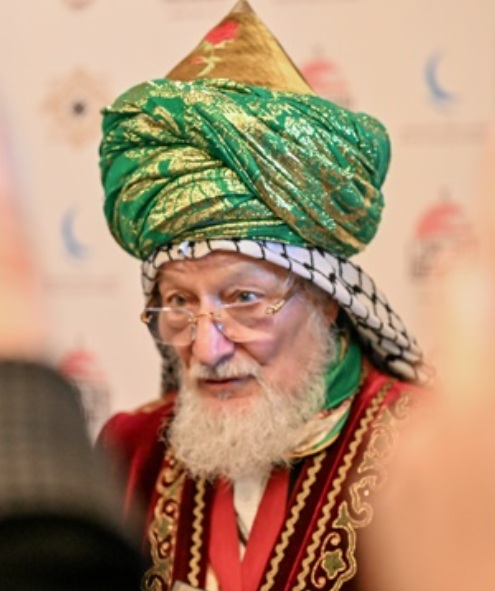
    Talgat Safich Tadzhuddin, Grand Mufti of Russia and Chairman of the Central Spiritual Administration of Muslims of Russia called for expanding and deepening intra-Islamic dialogue by drawing inspiration from the principles outlined in the Constitution of Medina. He noted that under the patronage of HM King Hamad, Bahrain has become a key platform for global Islamic initiatives aimed at strengthening unity in the Islamic nation.

    Ali bin Al Sayed Abdulrahman Al Hashemi, Advisor for Religious and Judicial Affairs at the UAE Ministry of Presidential Affairs, noted that the conference serves as an important platform for strengthening understanding between different Islamic sects and perspectives.

    He underscored that effective dialogue requires openness, wisdom, and ethical conduct, as history has demonstrated that engaging in meaningful discussions is crucial for addressing challenges.

    Al Hashemi also highlighted the importance of dialogue as a recurring theme in the Quran, noting that it provides diverse approaches to engaging with people of different beliefs. He underscored the need to prioritise dialogue within the Islamic nation itself to build stronger unity.

    Dr. Omar Bakhit Mohamed Adam, Sudan’s Minister of Religious Affairs and Endowments, commended the role of scholars in addressing the challenges facing the Islamic nation.

    He emphasised that issues of dialogue and citizenship require innovative solutions rather than repeated discussions.

    He noted that dialogue serves as a bridge for national stability, inclusivity, and understanding across various Islamic schools of thought, enriching Islamic civilisation and benefiting Muslim nations and their people.

  • Egypt’s Grand Mufti: Ahl Al Qibla document unites Muslims on common Islamic foundation

    Egypt’s Grand Mufti: Ahl Al Qibla document unites Muslims on common Islamic foundation

    Dr. Nazir Ayyad, Grand Mufti of Egypt and Head of the General Secretariat for Fatwa Authorities Worldwide, emphasised the significance of the Intra-Islamic Dialogue Conference in Bahrain, held under the royal patronage of His Majesty King Hamad bin Isa Al Khalifa.

    He noted that the conference responds to an invitation from His Eminence Dr. Ahmed Al Tayyeb, Grand Imam of Al Azhar Al Sharif and Chairman of the Muslim Council of Elders. He highlighted its importance amid the challenges facing Arab and Islamic nations and emphasised the need to unite around common ground and move away from division and discord.  

    In a statement to the Bahrain News Agency (BNA), the Grand Mufti of Egypt commended the Grand Imam of Al Azhar’s call at the conference’s opening to establish a unified framework for Ahl Al Qibla (People of the Qibla). This initiative aims to set general guidelines for all Islamic sects. He underlined the need for mechanisms to implement this historic document at both the Islamic and human levels, focusing on correcting religious misconceptions and eliminating extremist misinformation that fosters division.

    He added that academic institutions have a major role in turning this document from theory into practice. They bear the responsibility of raising awareness, promoting accurate knowledge, and countering misinformation. He also highlighted the role of cultural influence, including drama and media, in presenting an authentic and moderate image of Islamic heritage that fosters unity rather than division.

    Dr. Ayad said that the Ahl Al Qibla framework would focus on key principles, including respect for differences, avoiding accusations of heresy or excommunication, and emphasising shared human values. He highlighted that if scholars agree on these points, the success of its implementation will depend on sincerity, goodwill, and the active role of religious institutions in uniting the Islamic nation.

  • Third session of Intra-Islamic Dialogue Conference highlights dialogue’s role in unity and women’s participation in fostering understanding

    Third session of Intra-Islamic Dialogue Conference highlights dialogue’s role in unity and women’s participation in fostering understanding

    Scholars and intellectuals participating in the third session of the Intra-Islamic Dialogue Conference, held under the theme “One Nation… One Shared Destiny.” 

    Participants discussed the role of women in Islamic dialogue, fostering understanding among different Islamic schools of thought, and countering efforts to exploit differences to create division.

    The session, moderated by Dr. Rashid bin Ali Al Harthi, Dean of the College of Sharia Sciences in the Sultanate of Oman, focused on the role of women in promoting dialogue as essential partners in societal development and advocates of tolerance and moderation.

    In his remarks, Dr. Mahmoud Alkhuzaee, President of Justice and Wisdom in the United States, underscored the importance of spreading a culture of dialogue and tolerance to strengthen women’s status in society.

    He noted that empowering women benefits the entire community, emphasising that their role extends beyond participation in events. He referenced Khadijah bint Khuwaylid, wife of Prophet Muhammad (PBUH), as an example of wisdom and faith, highlighting her contributions to supporting the Islamic call.

    Dr. Aisha Yousif Al Mannai, Director of the Muhammad bin Hamad Al Thani Centre for Muslim Contribution to Civilisation at the College of Islamic Studies, Hamad Bin Khalifa University, emphasised that meaningful intra-Islamic dialogue requires the active participation of both men and women, as they are equally essential to society.

    She highlighted the role of women in instilling a culture of dialogue from childhood by promoting respect for differences and reinforcing principles of tolerance and moderation.

    She cited the Al Azhar Declaration, which highlights that societies cannot progress unless both men and women share responsibilities in building and advancing communities. She stressed that both have an essential role in upholding social, cultural, and religious values while contributing to the collective development of the Islamic world.

    Dr. Al Mannai also highlighted the resilience of Palestinian women in times of crisis, stating that their steadfastness in the face of adversity demonstrates their role in preserving identity and reinforcing Islamic values. 

    Dr. Shaikha Maryam bint Hassan Al Khalifa, Vice President of the Supreme Council for Women (SCW), addressed the role of women in shaping intra-Islamic dialogue. 

    She emphasised that, as half of society, women have a significant influence on fostering a culture of understanding from an early age. 

    She emphasised the importance of instilling values of tolerance and openness while enhancing dialogue skills among younger generations. 

    Dr. Shaikha Maryam bint Hassan emphasised that fostering a cohesive society requires respecting religious and sectarian diversity, even in the presence of differing viewpoints. She underscored the importance of reinforcing shared values that unite Muslims, enabling the Islamic nation to actively contribute to shaping its future.

    Dr. Safinaz Suleiman, a fellow at the University of Wisconsin-Madison in the United States, addressed the challenges facing Muslim communities in the West and the role of Islamic institutions in supporting them. 

    She emphasised that Muslims in Europe and the United States remain an integral part of the global Islamic nation and represent a source of civilisational strength that must be nurtured through stronger ties with the broader Muslim world.

    She noted that leading Islamic institutions, particularly Al Azhar, can play an important role in supporting Muslim communities in the West through cultural exchange programmes, academic cooperation, and initiatives that equip religious leaders with the necessary tools to promote a correct understanding of Islam.

    Dr. Nahla Al Saeedi, Advisor to the Grand Imam of Al Azhar for Expatriate Affairs, highlighted women’s contributions to fostering dialogue, noting that Islam grants them a distinguished status and recognises them as partners in building societies. She cited historical examples, such as Aisha bint Abi Bakr, wife of Prophet Muhammad (PBUH), who played a crucial role in enriching religious discourse. 

    Dr. Al Saeedi also called for enabling women to take on a more active role in bridging differences between Islamic sects, leveraging their natural abilities in communication and conflict resolution.

    Participants unanimously agreed that dialogue is essential for achieving social harmony and strengthening coexistence among Islamic schools of thought. 

    They noted the importance of embedding these values within society. They emphasised the need to integrate women into these efforts as key contributors to shaping future generations based on the principles of tolerance and mutual understanding.

  • Ayatollah Sheikh Ahmed Moballeghi participates in Intra-Islamic Dialogue Conference

    Ayatollah Sheikh Ahmed Moballeghi participates in Intra-Islamic Dialogue Conference

    Ayatollah Sheikh Ahmed Moballeghi participated in the Intra-Islamic Dialogue Conference, held under the theme “One Nation, One Shared Destiny.”

    Ayatollah Moballeghi emphasised that Islamic unity is not merely an intellectual concept, but a religious obligation dictated by the objectives of Sharia. He underscored that intra-sect dialogue must be prioritised as a means to restore relationships affected by differences and rebuild the Islamic nation on a foundation of understanding and harmony.

    He noted that Sharia came to organise the affairs of the Islamic nation and ensure its cohesion, not to consolidate division or disunity, explaining that Sharia is not an end in itself, but was established to serve and uphold religion in people’s lives.

    Ayatollah Moballeghi explained that disruptions in the relationship between Sharia and the Islamic nation could turn it from a unifying force into a source of division. He emphasised that differences in interpretation are not the issue; rather, their politicisation undermines the Islamic nation instead of fostering constructive intellectual discourse.

    He emphasised that jurisprudential differences should not lead to division but should instead be approached with a scholarly and comprehensive mindset that recognises Islam as a unified entity rather than fragmented groups in conflict.

    Ayatollah Moballeghi said that the development of Islamic sciences in each sect limits their comprehensive vision of the Islamic nation. He noted that this has led to narrow jurisprudential interpretations that do not fully reflect the essence of Sharia in its connection to the wider Islamic nation. He emphasised that when sects operate independently, their jurisprudential perspectives may reinforce division rather than fostering unity, ultimately weakening the influence of religion in society.

    He emphasised that for Sharia to fulfil its true role, Islamic science must adopt a vision that regards the Islamic nation as a single entity. Jurisprudential diversity, he said, should be a source of integration rather than division.

    Ayatollah Moballeghi called for a review of Islamic education curricula to emphasise commonalities between sects rather than differences, noting that any academic approach that neglects the unity of the Islamic nation risks disconnecting Sharia from contemporary realities and, consequently, from its religious purpose.

    Concluding his remarks, Ayatollah Moballeghi emphasised that Islamic unity is not just a slogan but a religious obligation that requires redefining the relationship between Sharia and the Islamic nation. He stressed the need for a structured and ongoing dialogue between sects within Islamic thought to strengthen stability and cohesion across the Islamic nation.

  • Russia’s Grand Mufti highlights Bahrain’s role in strengthening Islamic unity

    Russia’s Grand Mufti highlights Bahrain’s role in strengthening Islamic unity

    Shaikh Talgat Tadzhuddin, Grand Mufti of Russia and Chairman of the Central Spiritual Administration of Muslims of Russia, emphasised the role of the Kingdom of Bahrain and His Majesty King Hamad bin Isa Al Khalifa in fostering Islamic unity.

    He stated that the Intra-Islamic Dialogue Conference, held under the theme “One Nation, One Shared Destiny,” represents an important gathering for promoting solidarity, particularly amid global challenges.

    Shaikh Tadzhuddin noted the importance of consolidating unity within the Islamic world, underscoring the importance of addressing challenges while preserving the religious and humanitarian values passed down through generations.

    He highlighted the role of these values in strengthening cooperation among nations and developing education to support cultural and social collaboration. He also underscored the importance of faith and Islamic principles in countering division and discord.

    He commended Bahrain’s role in guiding the Islamic world toward cooperation and unity, describing it as a commitment that deserves support and appreciation for the benefit of Muslim communities.

    Shaikh Tadzhuddin also emphasised the importance of cooperation and solidarity in Islamic nations to confront global challenges. He called for intensified efforts to strengthen interfaith and intercultural relations based on coexistence, mutual respect, and collaboration.

  • Second session of Intra-Islamic Dialogue Conference highlights scholars’ role in promoting understanding, peaceful coexistence

    Second session of Intra-Islamic Dialogue Conference highlights scholars’ role in promoting understanding, peaceful coexistence

    Islamic scholars and thinkers from various countries stressed the need to promote a culture of understanding and tolerance among different sects. 

    They highlighted the pivotal role of scholars and religious authorities in overcoming barriers to dialogue and fostering connections between Islamic sects. 

    This discussion took place during the second session of the Intra-Islamic Dialogue Conference, held under the theme “One Nation, One Shared Destiny”.

    The session was held with the participation of prominent religious and intellectual figures. 

    The session was moderated by Dr. Abdullah bin Ibrahim Al Shreika, Director of the Centre for Moderation Promotion at Kuwait’s Ministry of Awqaf and Islamic Affairs.

    His Eminence Sayyed Ali Al Amin, member of the Muslim Council of Elders, said that differences in scholarly opinions have never been a cause of division among their followers. He emphasised that political exploitation of diversity is what leads to sharp divisions. 

    He called for enhancing the values of citizenship, justice, and equality among members of the Muslim nation. 

    He also suggested that establishing joint religious institutes among sects would help reinforce Islamic unity and tolerance.

    His Eminence Dr. Nazir Ayyad, Grand Mufti of Egypt and President of the General Secretariat for Fatwa Authorities Worldwide, emphasised that the concept of “citizenship” is not a foreign idea conflicting with Islam but rather a call for mutual understanding, justice, and coexistence. 

    He pointed out that the Prophet Mohammed embodied this principle in the Madina Charter, which recognised diverse identities and allowed each group its place within a unified state.

    His Eminence Dr. Ayyad proposed several measures to address the challenges facing Islamic countries, including declining public trust due to sectarian rhetoric. 

    He called for the establishment of an independent global association to unify efforts in fostering understanding and promoting citizenship while remaining free from sectarian agendas. 

    He also emphasised the importance of joint humanitarian initiatives in areas such as poverty alleviation and education to further develop unity and belonging.

    His Eminence Sheikh Khalifa Mohammed Al Madani Tal conveyed greetings from His Eminence Sheikh Modane Mounthaqi Ahmed Tal, Custodian of the Tijaniyya Order and President of the Islamic Scholars Association in Senegal. 

    He commended Bahrain for hosting the Intra-Islamic Dialogue Conference and praised His Majesty the King for supporting initiatives that promote tolerance, peaceful coexistence, respect for diversity, and religious freedoms.

    Dr. Ali Abdul Sahib Al Hakim, Secretary General of the Imam Al Hakim Foundation, emphasised that jurisprudential differences are a natural reality and should never lead to conflict or violence. 

    He highlighted the importance of cultural, intellectual, and social understanding and encouraged even a basic level of familiarity with other sects to foster mutual respect.

    Dr. Saeed Shibbar, Secretary-General of the Supreme Council of Scholars in Morocco and professor at Sultan Moulay Slimane University, called for scholars to return to their essential role in promoting inter-sect understanding. He urged them to focus on shared religious principles rather than minor doctrinal differences.

    Participants agreed on the need to sustain dialogue among sects rather than limiting it to occasional events. 

    They emphasised the importance of establishing permanent committees to further develop understanding and inter-sect cooperation.

    They also highlighted the need to instill values of tolerance and openness in future generations through education, cultural programmes, and media initiatives.

    The session concluded with a call for religious and cultural institutions to collaborate in fostering peaceful coexistence and ensuring continuous dialogue to promote unity across the Islamic world.